 Trailers
 Buses
Buses
 Tractors
 Rollers
 Cranes
 Loaders
 Graders
 Forklifts
 Dozers
 Excavators
 Boats
Boats
 Caravans





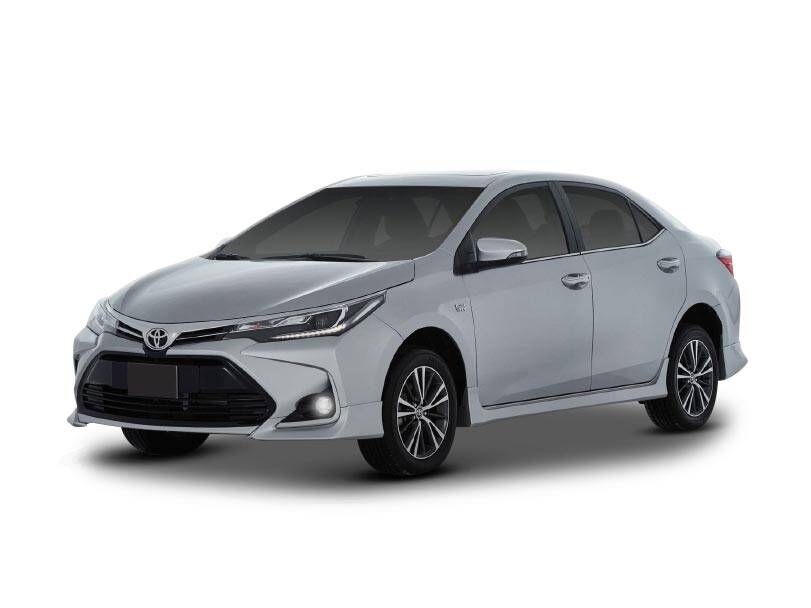
Why Are Cars So Expensive in South Africa? A Detailed Insight
The question of why cars are so expensive in South Africa is one that frustrates consumers and fascinates economists. While January 2026 saw record-breaking vehicle sales with 50,073 units sold—a 7.5% increase year-on-year—this buoyant market exists alongside persistent affordability challenges for the average South African consumer. The reality is that vehicle pricing in South Africa is shaped by a complex interplay of trade policy, currency dynamics, manufacturing realities, and global market forces. Here is a comprehensive breakdown of why cars cost what they do in South Africa today.
1. Import Tariffs: The 25% (and Potentially 50%) Barrier
The single most significant factor directly inflating vehicle prices is import duties. Currently, South Africa imposes a **25% import tariff** on completely built-up passenger vehicles from all countries . This means that for every R100,000 of a vehicle's value before it lands in Durban or Cape Town, an additional R25,000 is added in duty before the car even reaches a dealership floor.
However, the situation may soon become dramatically more expensive. The Department of Trade, Industry and Competition is actively considering raising these tariffs to as high as **50%** on vehicles imported from China and India—the world's two largest vehicle manufacturing hubs . This is the maximum "bound rate" permitted under World Trade Organization rules .
Why is this being considered? The government argues it is necessary to protect South Africa's domestic automotive industry from being overwhelmed by imports. The statistics are stark: in 2024, China accounted for **53%** of South Africa's total vehicle imports, while India contributed **22%** . Over the past four years, vehicle shipments from China have surged by an astonishing **368%** , and from India by **135%** . This flood of imports, particularly in the entry-level segment, has compressed profit margins for local manufacturers like Toyota, Volkswagen, and Ford .
If implemented, a 50% tariff could add approximately **$2,500 (around R45,000-R50,000)** to the price of some of South Africa's most affordable vehicles . Currently, **19 of South Africa's 20 cheapest passenger cars are imported from China or India** . The only exception is the Kia Picanto, imported from South Korea . A tariff hike of this magnitude would directly impact first-time buyers and lower-income households who depend on these affordable models.
2. The Logistics Crisis: Ports, Rail, and the "Logistics Tax"
Beyond tariffs, the cost of simply getting vehicles and components into and out of the country has skyrocketed due to South Africa's logistics crisis. The operational failures at **Transnet**, particularly at critical ports like Durban and Ngqura (Gqeberha), have created a "logistics tax" on every vehicle .
For an industry that operates on just-in-time manufacturing principles, delays are catastrophic. Ships waiting weeks to berth incur demurrage fees. Components destined for local assembly plants are delayed, causing production stoppages. Finished vehicles meant for export sit in holding yards, missing shipping windows.
While recent months have seen some improvement, with exports increasing a marginal **0.6%** in January 2026 to 24,568 units, the underlying fragility remains . The cost of these inefficiencies—whether from air-freighting urgent components or paying penalties for late deliveries—is inevitably passed on to the consumer. Furthermore, the collapse of the freight rail network has forced more components and vehicles onto the road, increasing damage, theft, and transport costs, all of which add to the final price tag.
3. Currency Volatility and the Rand's Purchasing Power
The automotive industry is a global business conducted in hard currency, primarily the US dollar and Euro. The South African Rand's long-term structural weakness and volatility have a direct impact on vehicle pricing.
Most vehicles sold in South Africa are either fully imported or contain a significant percentage of imported components. When the Rand depreciates against the Dollar or Euro, the cost of bringing those vehicles or parts into the country increases. Dealers and manufacturers cannot absorb these costs indefinitely, so they are passed on to consumers through price increases.
However, the picture is not uniformly bleak. In recent months, the **Rand's appreciation to multi-year best levels against the US dollar** has actually helped moderate new vehicle price increases by reducing imported inflation pressures . This currency stability, coupled with easing imported input cost pressures, has been a key factor supporting the strong sales momentum seen in early 2026 . It demonstrates just how sensitive the market is to currency movements—a 10-cent swing in the exchange rate can mean thousands of Rands difference on a vehicle's price.
4. Domestic Manufacturing Realities and the APDP
South Africa has a well-established automotive manufacturing sector, governed by the **Automotive Production and Development Programme (APDP)** , which aims to deepen local content and support exports . However, producing vehicles locally is not necessarily cheaper than importing them.
Local manufacturers face high input costs, including:
- **Labour costs:** While lower than in Europe or North America, South African automotive wages are significant and subject to industry bargaining councils.
- **Energy costs:** Years of load-shedding have forced manufacturers to invest heavily in solar and backup power solutions, capital expenditure that adds to the cost of each vehicle produced.
- **Component costs:** Despite the APDP's localisation goals, many high-tech components are still imported, exposing local manufacturers to the same currency risks as importers.
The APDP does provide rebates and duty credits to support local manufacturing . These mechanisms are designed to make locally produced vehicles more competitive, both in the domestic market and for export. However, the system is complex, and its benefits do not always translate directly into lower showroom prices for consumers.
The recent announcement that **Chery is acquiring Nissan's Rosslyn plant** in Pretoria signals a shift in the manufacturing landscape . This could lead to more local assembly of Chinese-branded vehicles, potentially mitigating future import tariff hikes if those vehicles qualify for local production incentives.
5. Global Trade Wars and Export Pressures
South Africa is not an island in the global automotive trade. The sector is highly export-oriented, with Europe being a key market. In 2024, South Africa exported **R28.7 billion** worth of vehicles to the United States alone, making it the country's third-largest automotive export destination .
However, the global trade environment is becoming increasingly hostile. The United States has already imposed a **30% tariff** on South African exports, and uncertainty looms over the extension of the African Growth and Opportunity Act (AGOA) beyond 2028 . These protectionist measures in key markets put pressure on the entire local value chain, from component manufacturers to original equipment manufacturers . If export volumes shrink, the economies of scale that help keep domestic prices in check could be eroded, potentially pushing up local prices further.
Naamsa has warned that "the proliferation of trade-restrictive measures and evolving industrial policies in advanced economies continue to test South Africa's automotive export competitiveness" . This global uncertainty forces manufacturers to price conservatively, building risk premiums into their local pricing structures.
6. Taxes, Levies, and the Cost of Compliance
Beyond import duties, a significant portion of a new car's price in South Africa consists of various taxes and levies:
- **VAT (Value-Added Tax) at 15%:** Applied to the total value of the vehicle, including all other duties and costs.
- **CO₂ Emissions Tax:** South Africa has an environmental levy on new passenger vehicles based on their CO₂ emissions. This tax can add tens of thousands of Rands to the price of fuel-hungry SUVs and performance cars.
- **Ad Valorem (Luxury) Tax:** A progressive tax applied to vehicles above a certain price threshold, which can significantly inflate the cost of premium models.
- **Road Accident Fund (RAF) Levy:** Included in the fuel levy, but also indirectly affects transport and logistics costs throughout the supply chain.
These taxes are often overlooked in discussions about affordability, but they represent a substantial and unavoidable component of the final purchase price.
7. Market Dynamics: Strong Demand Meets Supply Constraints
Paradoxically, the strong sales performance of the new vehicle market itself can contribute to pricing pressure. January 2026 saw the **16th straight month of year-on-year growth**, with the market breaching the 50,000-unit barrier . Toyota alone sold 11,786 units, followed by Suzuki at 6,410 and Volkswagen at 4,774 .
This robust demand, supported by interest rate cuts (a further 25-basis point cut is expected in March 2026) and improved consumer confidence, means that manufacturers and dealers have less incentive to discount heavily . When demand is strong and supply chains are still recovering from global disruptions, pricing power shifts to the sellers.
The top-selling models in January 2026 reflect this competitive but price-sensitive market:
1. Toyota Hilux – 2,475 units
2. Ford Ranger – 2,071 units
3. VW Polo Vivo – 2,060 units
4. Suzuki Swift – 2,029 units
5. Chery Tiggo 4 Pro – 1,625 units
The strong performance of affordable models like the Suzuki Swift and Chery Tiggo 4 Pro demonstrates that consumers are actively seeking value, but the overall market strength keeps prices firm.
8. The Coming Tariff Dilemma: A Case Study in Conflicting Interests
The proposed 50% tariff on Chinese and Indian imports perfectly illustrates why cars are so expensive and why the issue is so politically charged. There is a fundamental conflict between two legitimate national interests :
- **Protecting local manufacturing and jobs:** The government and domestic manufacturers argue that without tariff protection, the local industry will be decimated by cheaper imports, leading to job losses and the erosion of industrial capacity .
- **Protecting consumer affordability:** Critics, including the Motor Industry Staff Association (MISA) and retail sector representatives, warn that higher tariffs will price essential mobility out of reach for millions of South Africans, harm the dealership and servicing sectors, and slow the adoption of newer technologies .
Nicole Capper Austin, Chief Marketing Officer of Cars.co.za, notes that tariffs translate directly into higher monthly instalments for consumers who are already highly price-sensitive . Furthermore, because WTO rules prevent discriminatory tariffs, a hike cannot be applied only to China and India—it would apply to all imports, raising prices across the board .
9. The Rise of Chinese Brands and Market Realignment
The dramatic rise of Chinese brands in South Africa is reshaping the market and influencing pricing strategies. Brands like Chery, GWM, and Haval have gained significant market share over the past five years due to competitive pricing and feature-rich models . In 2025, Chery recorded a **98.0% year-on-year increase** in vehicle sales, while GWM reported a **45.3% increase** .
Earlier consumer concerns about reliability and parts availability have diminished, making these brands mainstream options. This competition has been a rare counterweight to price increases, forcing established brands to sharpen their pricing and value propositions. However, this competitive pressure is precisely what the proposed tariffs threaten to undo.
If the tariffs are implemented, Chinese-branded vehicles could see price increases that push them out of reach of their core market, potentially stalling their growth trajectory and reducing choice for consumers .
A Delicate Balancing Act
So, why are cars so expensive in South Africa? The answer is multi-layered. A **25% import duty** forms the baseline cost addition for imports. The **weak and volatile Rand** makes every imported component and vehicle more expensive. A **dysfunctional logistics system** adds unpredictable costs and delays. **Domestic production costs** are high due to energy, labour, and component realities. **Various taxes** (VAT, CO₂, Ad Valorem) add further layers. And now, the spectre of a **50% tariff** looms, threatening to make affordable cars significantly more expensive.
The South African automotive market finds itself at a crossroads. Record sales in late 2025 and early 2026 suggest a market with underlying strength and resilience . Yet, the policy decisions being made in 2026 regarding tariffs, trade agreements, and industrial support will determine whether that strength translates into sustainable, accessible mobility for all South Africans, or whether cars become an unattainable luxury for an even larger portion of the population .
For now, consumers benefit from a competitive market with strong demand and some currency relief. But the proposed tariff hike casts a long shadow, threatening to undo the affordability gains of recent years and redraw the entire landscape of vehicle pricing in South Africa. As industry stakeholders and government continue consultations, the challenge will be finding a balance that protects both the industry's future and the consumer's wallet.
Guides


2000 Escape 17

2010 Viking Velocity

2026 Apex Striker

2000 Sea-Doo GSX
Reviews